
Meds & diet haven’t helped enough
There’s a missing piece most reflux patients never hear about
One-time purchase. No subscriptions. Lifetime access.
You might be doing everything right.
You've tried meds and changing your diet but symptoms still keep breaking through.
It's easy to feel stuck. Like nothing is ever going to work and this is just how it is now.
You're not alone. About 1 in 3 people on acid medication still have significant symptoms despite treatment.
There's a reason symptoms keep coming back. And it isn't that you're broken, or doing it wrong, or "just anxious".
There's a piece of the picture that most people with reflux are never shown.
For many people, it's what's been missing all along.
What’s Possible
When this part is addressed, things start to shift.
✅ Fewer reflux episodes
✅ Symptoms become less intense & easier to recover from
✅ Flares settle more quickly instead of lingering
✅ Less time spent planning your day around your symptoms
✅ A gradual return to avoided foods & activities
Over time many people find they have more buffer between themselves and their triggers. A difficult meal or a stressful week stops being something to dread.
People describe it as turning down the volume.
Symptoms may not disappear completely but they stop running the show.
That’s what this program is built to help you get to.
The Missing Piece
Most reflux treatment works on two things:
1 | Reducing acid through meds
2 | Managing triggers through diet
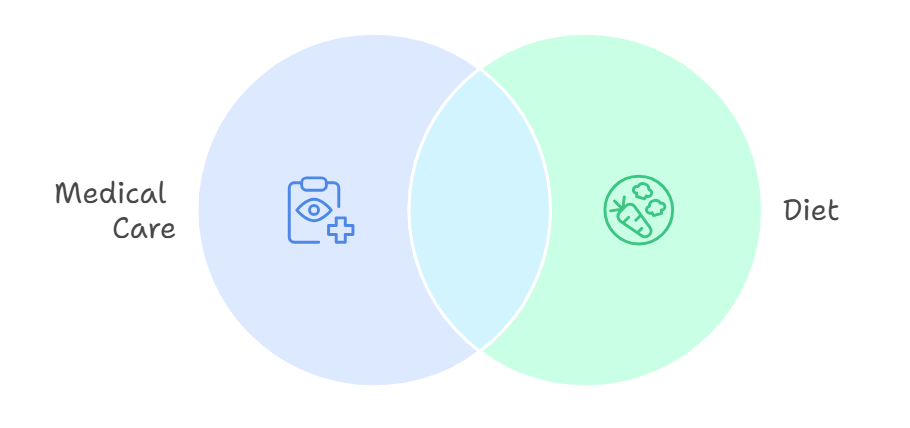
For many people that helps but it's not enough.
There's more to reflux than acid.
The picture isn't complete. There's a third piece that operates through a completely different pathway and it's recognized in the most current evidence-based guidelines for reflux care. But it's almost never addressed in standard care.
That third piece is the gut-brain connection.
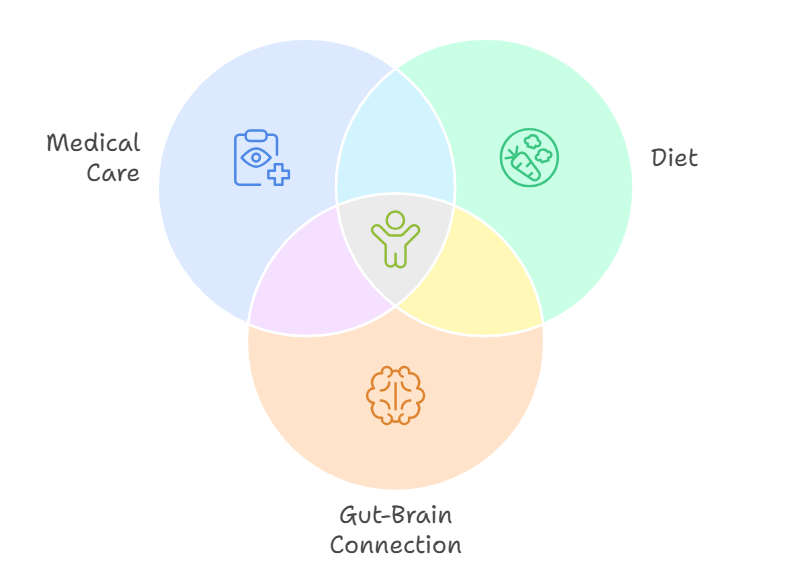
This program is built specifically around that missing third piece.
Two Ways Diaphragmatic Breathing Helps Reflux
Your nervous system runs in two modes.
When fight or flight is running, pressure builds around the valve that keeps acid down. Symptoms become easier to trigger and harder to settle.
Diaphragmatic breathing shifts your nervous system toward rest & digest. With consistent practice that shift becomes more accessible throughout the day, not just during the practice itself. Over time the system becomes less reactive.
This isn't just a relaxation technique. It's also targeted physical training.
There's a valve at the bottom of your esophagus whose job is to stay closed and keep acid down where it belongs. A part of your diaphragm muscle wraps directly around that valve and provides roughly 85% of the pressure that keeps it closed.
Your diaphragm is a skeletal muscle. It responds to training. Diaphragmatic breathing trains that muscle to do its job more effectively with every breath.
That's what makes this practice different from breathing or relaxation approaches you may have tried before.
Two anti-reflux pathways.
At the same time.
What the Research Shows
A breathing practice for reflux can sound like pseudoscience. It isn't.
It's a clinically grounded skill built on peer-reviewed published research and used in leading academic medical centers.
The American Gastroenterological Association specifically recommends diaphragmatic breathing & brain-gut behavioral approaches as part of evidence-based reflux care.
Yadlapati et al., 2022, Gastroenterology
In a study focused on people whose reflux was sensitive to stress, relaxation training including diaphragmatic breathing reduced reflux episodes nearly 7x & cut acid exposure by 75%, bringing levels back to normal compared to a control group.
McDonald-Haile et al., 1994, Gastroenterology
In a study of patients who added diaphragmatic breathing training to their care, 82% had stopped their acid medication entirely at 6 months, compared to only 6% of the control group.
Sun et al., 2015, Diseases of the Esophagus
A meta-analysis of 7 studies confirmed statistically significant improvement in lower esophageal sphincter pressure with consistent breathing exercise practice.
Qiu et al., 2020, Annals of Palliative Medicine
An Honest Look at the Evidence
These findings come from peer-reviewed published research and the results are genuinely encouraging. That said, science is rarely simple and this field is still developing.
This practice works well for many people but it isn't a magic bullet. For more info, see the FAQ below.
What’s Inside
This program is designed to take you somewhere, not just give you information.
It was built with a specific journey in mind.
✅ First you understand the why behind your symptoms.
✅ Then you build the skill progressively.
✅ Finally you make the practice your own.
Short and extended practice options are included to make it easier to fit into a busy day.
Everything you need is here. You just follow the progression.
No new app needed
Delivered as a private podcast feed. If you can listen to a podcast you already know how to access this.
Nothing to install. No course logins. Available on your phone whenever you need it.
If you're not finding this program helpful within 30 days, reach out & I'll give you a full refund.
Common Questions
Absolutely not. This isn't saying your symptoms are just due to stress or that it's all in your head.
What it does mean is that most digestive conditions are particularly sensitive to the state of the nervous system. It can be helpful to think of reflux as a mind-body condition. It's a real medical condition influenced by both the body and the nervous system. Stress, emotions and even past trauma can worsen or prolong symptoms.
Decades of research confirm that stress has a measurable impact on digestion and symptom severity. That's not psychological. It's physiological.
The vast majority of breathing practices are designed with relaxation as the main objective, not specifically for reflux. If you've tried diaphragmatic breathing specifically and didn't find it helpful, it was most likely due to lack of proper guidance or a clear understanding of what to look for and realistic expectations of when to start seeing results.
Diaphragmatic breathing is not just a relaxation technique. It directly trains the crural diaphragm, the muscle that wraps around the valve at the bottom of your esophagus and provides roughly 85% of the pressure that keeps it closed. That valve's job is to keep acid down where it belongs. That's a targeted physical mechanism. The research supports it specifically for reflux, not just for stress.
The research is encouraging but results vary and the timeline is worth understanding.
Most people notice the first shifts early, within the first few weeks. If you have stress, anxiety and hypervigilance around your reflux, this is likely what is going to settle down first. Less scanning your body. Less dreading the next meal. Less planning your day around reflux.
With continued practice physical changes follow. Research shows meaningful improvement in symptom frequency and severity within four weeks of regular practice, with continued improvement over months.1,2
The realistic picture for most people is what others describe as turning down the volume. Symptoms may not disappear completely but they become less intense, easier to recover from and less likely to be triggered. Over time many people find they have significantly more buffer between themselves and their triggers.
For some people the changes go further. The medication reduction findings in the research are real but need realistic expectations. See the medication question below for more detail.
Possibly. The research is encouraging but the realistic timeline is longer than most people expect.
In one study, 82% of patients in the breathing training group had stopped their acid medication entirely at 6 months, compared to only 6% of the control group.3
In another, after 9 months of consistent practice, medication use had dropped to less than a third of what it was at the start.1
Not everyone gets there. Results varied across studies and depended on consistency of practice. This program isn't designed as a medication replacement and stopping or reducing medication is not the right goal for everyone.
But for people who want to work toward using less medication over time, this practice gives your body a meaningful tool to support that goal. Always work with your doctor before making any changes to your medication.
For many people this program, used consistently alongside medical care, is enough to produce meaningful change.
For others, particularly those dealing with significant anxiety, symptom-focused fear or persistent patterns of avoidance around reflux, this program is a strong foundation but not the complete picture. Individualized treatment with a GI psychologist who can take this work further may be the ideal next step.
Either way, building the foundation with this program puts you ahead. Diaphragmatic breathing is typically one of the first skills a GI psychologist would teach. If you do end up working with a specialist, you won't be starting from zero.
The practice tracks range from 7 to 20 minutes and include both standard and extended versions so you can fit practice into whatever your day allows. They're designed to fit into a day, not restructure it.
Consistency matters more than perfection. You don't need to practice every single day to build the skill and get the positive effects on your nervous system over time. Regular practice is what matters, and even a shorter session is better than skipping entirely.
Starting small is completely fine. Many people begin with just a few minutes and build from there. The program is designed to meet you where you are.
The program is delivered to you as a private podcast feed. If you listen to podcasts you already know how to use it. After purchase you'll receive a private link that adds the program directly to your podcast app of choice.
Nothing to install. No course platform to log into. No new accounts. Available on your phone whenever you need it, including offline.
1 Eherer et al. (2012). Positive effect of abdominal breathing exercise on gastroesophageal reflux disease. American Journal of Gastroenterology.
2 Hosseini et al. (2022). The effect of diaphragmatic breathing on gastroesophageal reflux disease. Complementary Therapies in Clinical Practice.
3 Sun et al. (2015). Short-term and long-term effect of diaphragm biofeedback training in gastroesophageal reflux disease. Diseases of the Esophagus.
About Dr Scott Rower
Licensed Clinical Psychologist

Most of my career has been spent helping people work through anxiety, depression and trauma. I also have Crohn's disease. I've been managing it for nearly 20 years.
That combination led me to seek out specialized training in GI psychology, the field where brain-gut behavioral science meets digestive care.
What I found were tools that are remarkably effective, well researched and almost completely absent from most GI treatment.
Most people struggling with reflux never hear about them. This program is my attempt to change that.
- 2 educational tracks on the gut-brain connection & reflux
- 7 guided step-by-step breathing practices
- Short & extended practice options to fit a busy day
- Structured progression, nothing to figure out
-
Immediate access via private podcast feed
(no new apps or logins, available on any device)
If you're not finding this program helpful within 30 days, reach out & I'll give you a full refund.
This program is intended for adults 18 years of age and older. It is designed to complement medical care, not replace it. The information and practices here are for educational purposes and do not constitute medical advice, diagnosis or treatment. Always work with your physician or qualified healthcare provider regarding any medical condition, including decisions about medication.
If you're experiencing symptoms that are new, rapidly worsening or significantly different from your usual pattern, including difficulty swallowing, unexplained weight loss, vomiting blood, black or tarry stools or chest pain, please consult your doctor before using this program.
Results vary by individual. The research findings referenced on this page reflect outcomes from published clinical studies and are not a guarantee of personal results.
Use of this program does not create a patient-client or therapeutic relationship with Dr. Scott Rower or Rest & Digest. Full Terms & Conditions available here.